
2nd Sep 2026
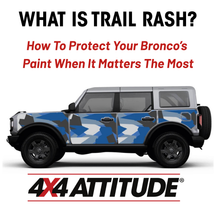
What Is Trail Rash? How to Protect Your Bronco on the Trail
Bronco Trail Rash Can Appear After One Narrow Trail
Trail rash is the collection of scratches, scuffs, pinstripes, and paint marks that can appear after an off-road trip. Branches, brush, grit, mud, and small debris can all leave visible marks on a Bronco’s painted surfaces.
The damage may not look serious while the Bronco is covered in dust. It often becomes more noticeable after washing the vehicle or viewing the paint under bright light.
Some marks affect only surface contamination or the clear coat. Others may reach the color coat or expose the material below it. The depth of the damage determines whether cleaning, polishing, touch-up paint, or professional repair is appropriate.
Bronco trail rash protection works best when it begins before the trail. Start by understanding where contact is likely to occur, choose the right protection for your body style, and follow proper installation and maintenance practices.
Our Action Shield™ body armor provides removable, non-magnetic coverage for compatible painted panels. Separate collections are available for 2-door Ford Broncos and 4-door Ford Broncos.
What Does Trail Rash Look Like?
“Trail rash” is an informal term rather than a specific type of paint damage. Owners may use it to describe anything from faint branch lines to deeper scratches.
Common signs include:
- Thin horizontal lines from branches or brush
- Light scuffs that become visible after washing
- Cloudy or dull areas in the clear coat
- Mud or grit marks along lower painted panels
- Small chips caused by loose debris
- Scratches around doors and rear quarter panels
- Marks near body lines that extend outward toward vegetation
A fingernail test is sometimes used as a rough way to judge scratch depth, but it is not a complete diagnosis. If a mark appears deep, exposes another color, or catches a fingernail noticeably, ask a qualified paint professional to inspect it before attempting aggressive correction.
Where Does Trail Rash Usually Appear on a Ford Bronco?
The exact damage pattern depends on the route and terrain. However, the areas that extend farthest toward brush or sit near kicked-up debris usually face the greatest exposure.
| Bronco Area | Common Exposure | What to Inspect |
|---|---|---|
| Front doors | Branches, brush, and narrow trail edges | Horizontal lines, scuffs, and clear-coat marks |
| Rear doors on 4-door models | Brush that continues along the body | Long scratches and repeated contact marks |
| Rear quarter panels | Branches that bend around the vehicle | Scuffs near the rear wheel and body lines |
| Lower painted panels | Mud, gravel, sand, and loose debris | Chips, abrasion, and embedded contamination |
| Areas near handles and trim | Brush contact and trapped trail dirt | Marks around edges and raised components |
Trail rash can happen on technical trails, but it can also happen on easy routes. A narrow forest road, overgrown property entrance, hunting trail, or brush-lined access road may create repeated body contact without any major obstacle.
Why Careful Driving Cannot Prevent Every Scratch
Better line choice and slower speeds can reduce unnecessary contact. They cannot control every branch, bush, or piece of loose debris.
A branch may swing back after the vehicle ahead passes it. Tall grass can hide harder brush. A narrow turn can place the rear quarter closer to vegetation than the front of the Bronco was.
Trail conditions also change. Rain, wind, erosion, maintenance work, and seasonal growth can make a familiar route tighter than it was during a previous trip.
Use careful driving as one part of the protection plan. Combine it with route research, adequate spacing, pre-trip inspection, and fitted body protection when the terrain calls for it.
Not Every Paint-Protection Product Solves the Same Problem
Wax, ceramic coatings, vinyl wraps, paint protection film, and removable body armor serve different purposes. Owners should not assume that every product marketed as paint protection provides the same type of coverage.
| Protection Type | Primary Role | Trail-Rash Consideration |
|---|---|---|
| Wax or paint sealant | Surface appearance and easier cleaning | Does not create a substantial physical barrier against branches |
| Ceramic coating | Surface slickness, gloss, and chemical resistance | Should not be treated as body armor for repeated brush contact |
| Vinyl wrap | Color or design change with some surface coverage | Protection varies by material and installation |
| Paint protection film | Transparent coverage for selected painted areas | Material thickness, coverage, and installation vary |
| Magnetic body armor | Removable exterior panel coverage | Dirt or movement between the magnet and paint may create concerns |
| Action Shield™ body armor | Removable, adhesive-backed coverage for fitted painted panels | Designed to help protect covered areas from brush, scuffs, and trail debris |
The right choice depends on how you use the Bronco, how much coverage you want, and whether you prefer a temporary or long-term installation. No surface product makes painted body panels indestructible.
How Action Shield™ Helps Protect Bronco Paint
Action Shield™ body armor uses a layered construction with a textured, scratch-resistant exterior. A non-magnetic adhesive layer holds the fitted panels against the vehicle rather than relying on magnets.
The panels are designed to help protect covered painted areas from common on-road and off-road threats, including:
- Branches and bushes
- Light trail scuffs
- Mud and dirt
- Small rocks and road debris
- Parking-lot contact and similar surface threats
Action Shield™ is removable, washable, reusable, and repositionable when maintained correctly. It can be installed for a trip and removed afterward, or left in place according to the product and maintenance instructions.
The installation kit includes a wool applicator, instructions, diagrams, and corrugated boards for storing the panels after removal.
Choose the Correct Bronco Body Armor Fitment
Action Shield™ panels are shaped for specific body styles. A 2-door kit will not replace a 4-door kit, and standard Bronco kits should not be ordered for a Bronco Raptor.
| Vehicle | Listed Fitment | Correct Collection |
|---|---|---|
| Full-size Ford Bronco 2-door | 2021–present 2-door models | Bronco 2-door Action Shield™ body armor |
| Full-size Ford Bronco 4-door | 2021–present 4-door models | Bronco 4-door Action Shield™ body armor |
| Ford Bronco Raptor | Requires a Raptor-specific product | Select only an Action Shield™ that specifically lists Raptor fitment |
| Ford Bronco Sport | Not included in these full-size Bronco applications | Do not order full-size Bronco body armor for a Bronco Sport |
The standard Bronco 2-door Action Shield™ and Bronco 4-door Action Shield™ listings specifically exclude the Raptor. Always review the individual product description before ordering.
How to Prepare Your Bronco Before Installing Body Armor
Clean installation supports better adhesion. Installing panels over dirt or grit can interfere with the bond and place abrasive material against the paint.
Before installation:
- Wash the Bronco thoroughly.
- Remove dirt, dust, mud, wax residue, and other surface contamination.
- Dry the vehicle completely.
- Move the Bronco away from extreme heat, cold, or direct sunlight.
- Lay out the panels and confirm their positions.
- Inspect the adhesive side for dirt or debris.
- Follow the supplied instructions and diagrams.
Install each panel with a flush, uninterrupted bond. Loose edges may allow wind, water, or dirt to work underneath the panel and weaken adhesion.
Do not force a standard panel around an incompatible aftermarket accessory. If the Bronco has badges or modifications that affect panel fitment, review the modification instructions and warranty information before cutting anything.
Pre-Trail Habits That Can Reduce Bronco Trail Rash
Body protection is most effective when it is part of a complete trail routine.
- Research the route and expected vegetation.
- Check recent trail reports when available.
- Wash and dry the Bronco before installing panels.
- Inspect every Action Shield™ edge before departure.
- Confirm that no panel is folded, creased, or lifted.
- Leave enough space behind other vehicles when possible.
- Slow down before entering the narrow brush.
- Use a spotter when obstacles or body clearance are difficult to judge.
- Avoid dragging the body against branches when another safe line is available.
These habits cannot eliminate every risk. They can reduce avoidable contact and help protective panels perform as intended.
What to Do After an Off-Road Trip
Do not evaluate the Bronco while it is still covered in mud and dust. Wash it first so you can inspect the paint and protective panels clearly.
Inspect the Installed Panels
Check each Action Shield™ panel for damaged edges, lifting, heavy abrasion, or material trapped underneath. Pay close attention to areas that encountered brush.
Use Care Around Panel Edges While Washing
If you use a pressure hose while the panels remain installed, avoid spraying at an angle that forces water underneath the edges.
Inspect the Exposed Paint
Look at areas the panels do not cover. Check the lower body, door edges, trim, handles, and areas surrounding aftermarket accessories.
Assess New Marks Carefully
Do not begin aggressive polishing before determining the depth of a scratch. Cleaning and light polishing may improve some clear-coat marks. More serious damage may require touch-up paint or professional correction.
How to Remove and Store Action Shield™ Panels
Careful removal helps prevent damage to the panels. Do not pull one corner quickly or rip a panel away from the vehicle.
- Slowly lift one upper corner.
- Pull the panel diagonally and downward toward the opposite corner.
- Stop near the halfway point.
- Lift the other upper corner.
- Continue pulling diagonally and downward until the panel releases.
- Return the panel to its corrugated storage board.
If the adhesive becomes dirty, wash it with water, dish soap, and a soft sponge. Allow the panel to dry completely before storing or reinstalling it.
Store the panels flat on the supplied boards in a dry location. Do not fold them. Avoid extreme temperatures and direct sunlight during removal and installation. Extreme cold and road salt may also reduce product life, so follow the seasonal maintenance guidance.
Common Bronco Trail-Rash Protection Mistakes
- Waiting until after the first scratched-up trip: Install protection before entering narrow brush.
- Ordering the wrong body style: Select separate 2-door, 4-door, or Raptor-specific protection.
- Confusing the Bronco with the Bronco Sport: The linked products fit the full-size Bronco.
- Installing over dirt: Clean and dry the painted surface first.
- Ignoring lifted edges: Full contact helps prevent wind and dirt intrusion.
- Folding removed panels: Store them flat on the supplied boards.
- Using aggressive pressure at the edges: Avoid forcing water underneath installed panels.
- Assuming covered means indestructible: Avoid unnecessary body contact whenever possible.
- Treating surface coatings like physical armor: Understand what each type of protection is designed to do.
Frequently Asked Questions About Bronco Trail Rash
Can trail rash be polished out?
Some light clear-coat marks may improve with proper polishing. Deeper scratches may require touch-up paint or professional repair. Inspect the damage before using an abrasive product.
Will a ceramic coating stop branch scratches?
A ceramic coating can support gloss, cleaning, and surface maintenance, but it should not be treated as physical body armor for repeated branch contact.
Does Action Shield™ fit the Bronco Sport?
The linked 2-door and 4-door collections are for the full-size Ford Bronco. They should not be ordered for a Bronco Sport unless a product specifically lists Bronco Sport fitment.
Does the standard Bronco Action Shield™ fit the Raptor?
No. The standard 2-door and 4-door listings exclude the Bronco Raptor. Choose a Raptor-specific product.
Can Action Shield™ panels be reused?
Yes. The adhesive is washable and reusable when the panels are cleaned, dried, removed, and stored according to the maintenance instructions.
Can Action Shield™ prevent every scratch or rock chip?
No protective product can guarantee that. Action Shield™ is designed to help protect the painted areas it covers from common scuffs, brush, dirt, and trail debris.
Protect Your Bronco Before the Trail Gets Tight
Trail rash can happen on technical trails, easy forest roads, hunting property, and overgrown access routes. Wherever brush and painted panels meet, scratches become possible.
A stronger protection plan combines route awareness, careful driving, clean installation, post-trail inspection, and body armor made for the correct Bronco. Explore our complete Action Shield™ body armor collection, compare 2-door Bronco protection and 4-door Bronco protection, and review our installation and maintenance guidance before the next trail trip.